Will Robotaxis Reduce Traffic? Follow the Empty Miles
A driverless car may improve dispatch without freeing road space. Ride-hail evidence, empty mileage, occupancy and transit substitution show what cities need to measure.
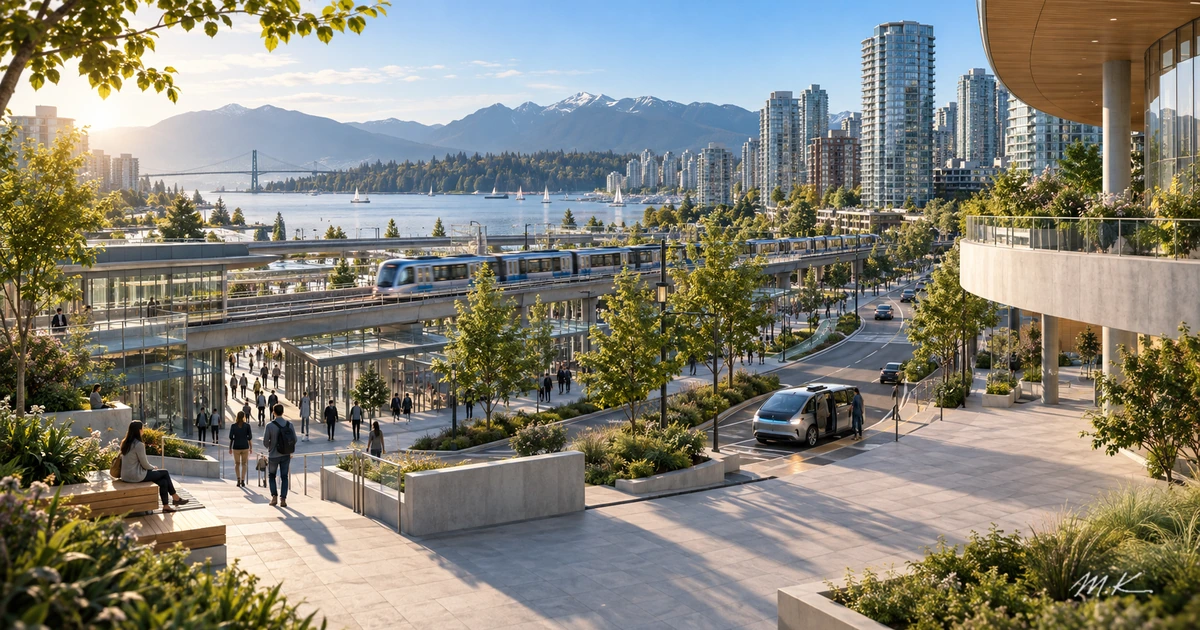
A robotaxi can accept a dispatch without a driver, follow a route and potentially make trips possible for people who cannot drive. None of that, on its own, says whether the city has less traffic. The car still travels to pick people up. It may reposition after drop-off. A convenient ride may replace a bus trip or create a trip that would not otherwise have happened.
The question is how much scarce street capacity the city spends for each person's completed journey. Evidence from human-driven ride-hailing offers a warning, while autonomous-vehicle reporting and city simulations show what must be tested. They do not establish a measured, citywide congestion effect for today's robotaxis.
A better dispatch can coexist with a busier road
More efficient matching could shorten waits and keep a fleet in use. Shared vehicles might also reduce the need to search for parking. Those are plausible gains. A platform's efficiency per booking, however, is different from the effect of all its vehicles on a city's roads.
The San Francisco County Transportation Authority's 2018 study estimated that transportation network companies such as Uber and Lyft accounted for 51% of the increase in daily vehicle hours of delay and 47% of the increase in vehicle miles travelled in San Francisco from 2010 to 2016. Employment and population growth explained most of the remaining deterioration. This is an estimate for a particular city, period and human-driven service. It is not an estimate for robotaxis, nor a forecast for another city.
It does reveal the accounting problem: a passenger can get a faster pickup while the street bears more driving overall. Passenger convenience and road demand have to be measured together.
The ride includes more than the occupied leg
Counting only the miles between pickup and drop-off omits the drive to collect a passenger, the wait between jobs, repositioning and trips to a depot. Automation does not erase those movements. It might make repositioning cheaper to operate; whether that increases empty mileage is a hypothesis that requires fleet data.
A 2019 New York City Taxi and Limousine Commission and Department of Transportation study defined “cruising” as time spent waiting for the next trip and travelling to the next pickup. Its Manhattan-core baseline put cruising time at about 41%. A waiting car may be parked, double-parked or circulating. That 41% is a share of time, not an empty-mile percentage, and it describes human-driven for-hire vehicles rather than autonomous fleets. The study tracked vehicle hours, passenger utilization, waiting time and fares together because improving one measure can shift costs elsewhere.
California's Public Utilities Commission quarterly-reporting framework asks autonomous passenger-service operators for measures including vehicle miles in passenger service, miles to pickup, waiting time and passenger counts. Those fields provide a way to test fleet operations. They do not by themselves prove a reduction in citywide delay; some public reports also contain redactions.
What did the passenger use before?
Suppose robotaxis mostly replace solo car trips, reduce parking searches and keep pickup mileage low. Total road demand might fall. Suppose instead that short waits and low prices draw riders from buses, trains and walking, or encourage trips that were not previously made. Total vehicle kilometres might rise. These are conditional scenarios, not measured effects of robotaxi deployment.
The International Transport Forum's Lisbon simulation illustrates why design matters. Outcomes changed with the type of shared service, its level of adoption and the availability of high-capacity public transport. Total travel increased in many scenarios. This was a model based on Lisbon travel and network data, not an observation of a robotaxi rollout in Lisbon. A smaller fleet of shared cars should not be confused with fewer kilometres driven.
The curb is another constraint. A car may arrive efficiently yet wait outside a busy station, occupying space needed by buses, pedestrians and other pickups. That is a risk to measure locally, not a conclusion one can derive from a routing algorithm.
A practical test for cities
My test is whether the system uses less street space per completed person-trip and passenger-kilometre. It is an analytical proposal, not an established certification standard. A trial should publish comparable before-and-after measures for the same places and times:
- Total vehicle kilometres and hours: separate occupied driving, pickup, repositioning and depot trips; break out peaks and constrained corridors.
- Occupancy and mode shift: passengers per vehicle, pooled rides, and what riders say they would otherwise have used: a private car, transit, walking or no trip. Report survey samples and uncertainty.
- Street and service outcomes: bus speeds, curb obstruction, passenger waits, accessibility and safety. An average car speed cannot represent everyone's benefit.
Robotaxis could help if they replace private-car travel and parking search, keep empty movements within bounds, and connect people to high-capacity transit rather than drain it. They could also make congestion more convenient if each gain in ease is paid for with extra empty driving and more short car trips. The answer belongs to the full transport system, not the intelligence of one vehicle.
That extends the broader question in The Future City's Transportation Problem: why a city requires so much travel in the first place. Here, the narrower question is how a new service changes the use of limited road capacity. For the technology behind vehicles that act in the physical world, see Physical AI and Its Real-World Limits. Readers and city officials can use the three groups of measures above to ask for comparable outcomes before accepting a claim of less traffic.
Frequently asked questions
If a robotaxi dispatches more efficiently, why might traffic still grow?
The fleet still drives empty to pickups and between jobs. Easier travel may also create trips or replace higher-occupancy transit. Citywide vehicle kilometres and peak delay matter more than one car's route efficiency.
Is New York's 41% figure a robotaxi empty-mile rate?
No. It was a cruising-time measure for human-driven for-hire vehicles in a particular Manhattan area. It included waiting and pickup time, and waiting cars were not necessarily moving.
Do pooled self-driving cars always use less road space?
No. Occupancy, pickup distances, transit substitution and newly induced journeys all matter. The Lisbon research tested scenarios; its results depended on the system design.
What should a city publish first?
Separate occupied, pickup and other empty vehicle kilometres, alongside peak vehicle hours and a mode-shift survey. Consistent definitions are necessary to distinguish faster pickups from lower congestion.