Is This Road Worth Building? Adam Smith and the Mackenzie Valley Highway
Canada’s 2026 budget proposes funding the Mackenzie Valley Highway. Adam Smith helps frame a question about year-round access, long-term maintenance and who bears the costs.
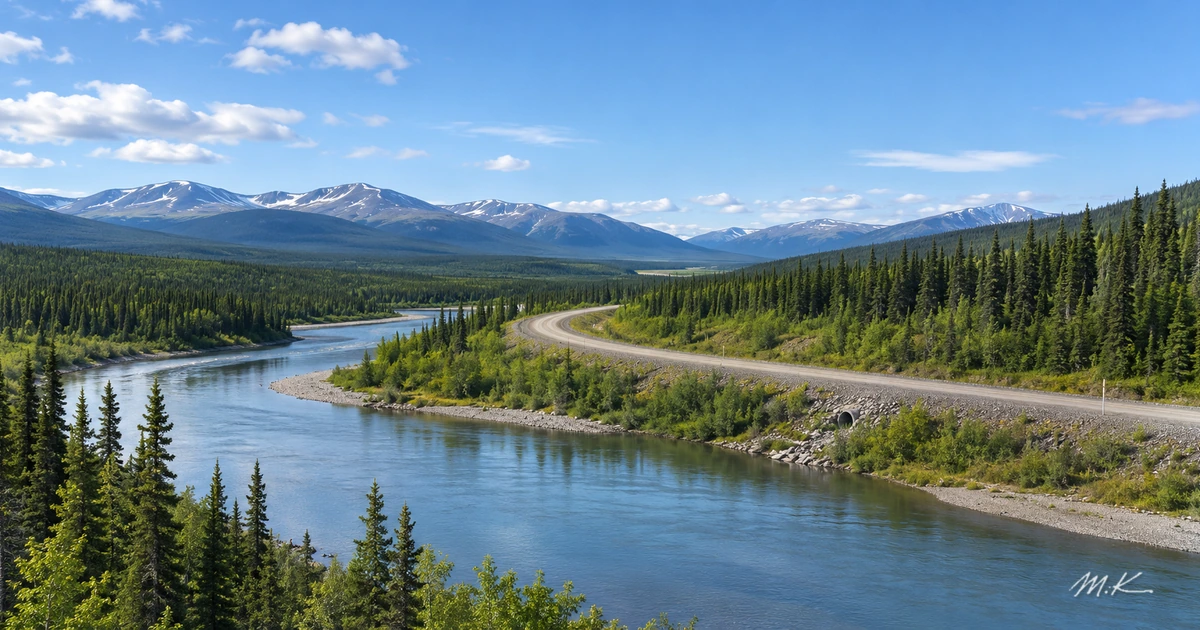
Suppose a community can receive freight by road only during part of the year. A road that opens up additional weeks may make only a modest difference to the annual vehicle count. It could still change when a business can restock and when a resident can arrange a trip. The option to travel at the right time has value even if people do not exercise it often.
That is where I would start with the Mackenzie Valley Highway. Ask whom the road could serve year-round before asking how much it could collect. Public funding can make sense where access would materially reduce disruptions to essential travel and resupply, even if revenue would fall short. Such a decision carries a long commitment to maintenance and uses resources that could improve access in other ways.
What the federal budget proposes
In Chapter 2 of Budget 2026, released on November 5, the federal government proposes to fund construction and certain maintenance costs of the Mackenzie Valley Highway in full. The chapter’s table shows $3.1 billion over five fiscal years for the measure. The broader proposal is for roughly 800 kilometres of all-season gravel road, from Wrigley to the Dempster Highway south of Inuvik, passing near Tulita, Norman Wells and Fort Good Hope.
The Government of the Northwest Territories’ project page describes a narrower phase under environmental assessment, from Wrigley to Norman Wells, at approximately 320 kilometres. Some standalone road and bridge works can proceed separately. The broader highway still depends on planning, assessment and approvals. The funding proposal brings the question of year-round access into focus, while actual changes in resupply costs and travel reliability remain to be measured. Territorial update on standalone works
What Adam Smith would have us ask
In Book V, Chapter 1, Part III of The Wealth of Nations, Smith identifies works that can greatly benefit society even though a private party could not expect to recover its costs. He also argues that many roads, bridges and canals can raise revenue from users to help pay their way. Fees can bring wear, upkeep and use into the same conversation. He warns that public funds can also produce impressive roads built for people with influence rather than people with a need.
The two arguments are worth holding together. A weak commercial return leaves room for genuine public value. A claim of public value still needs a test. Smith was writing about eighteenth-century commerce and institutions. His distinction helps frame a modern decision, while the route, funding model and local effects require evidence from the people and governments involved today.
Reliability changes decisions before it changes traffic
Consider a hypothetical retailer with an uncertain delivery window. More reliable transport might let it carry less reserve stock. Or the owner might keep the same reserves and use better delivery timing to reduce stockouts. The gain depends on the service people actually receive. Total kilometres built or average daily traffic alone would tell us little about it.
I would compare how many days each transport option works, how long a disruption can last and how often essential freight arrives when promised. I would look at delivered costs and differences among communities. That comparison should include improved winter roads, ferries, air freight backup and phased construction, using comparable assumptions about demand, climate and maintenance.
There is a parallel with how cities can give people back time and choices. The trip a system makes possible, at a time someone actually needs it, can be more consequential than an increase in the average number of trips.
What would change my mind
If year-round access would substantially reduce disruptions for northern communities, a low traffic count would not by itself rule out public funding. I would still want to see who pays for routine upkeep, winter service and unexpected repairs, including the responsibilities that extend beyond the proposed funding period. Those costs compete with other uses of the same public funds.
The distribution of harm matters too. Affected Indigenous governments and communities need to be able to assess what alternative routes and conditions would mean for land, wildlife and livelihoods. The existence of engagement tells us that a process is underway. It leaves the views of individual communities and the acceptability of particular impacts to be established.
If a lower-cost alternative delivers comparable reliability over its life, it deserves preference. If remaining impacts are unacceptable to the communities that would bear them, I would reconsider the alignment or scale. The useful test is how much dependable access a project buys, for whom, and at what continuing cost.
Listen to the conversation
Listen to M.K., Dorami and Adam Smith discuss what makes a road worth building. This Mandarin episode brings an interpretation of Smith’s work into a discussion about year-round access and the costs of keeping a road open.
Frequently asked questions
Has the full Mackenzie Valley Highway been approved for construction?
Budget 2026 proposes construction funding and certain maintenance costs. The territorial government describes an ongoing environmental assessment for the Wrigley–Norman Wells phase and separate regulatory and planning steps for the broader proposal.
Can a low-traffic road have significant public value?
Yes. A reliable route can change whether essential trips and shipments are possible when needed. Those gains should be tested against the full costs and the performance of other transport options.
Did Adam Smith argue that public roads should always be paid for by taxes?
Smith recognized a public role for works whose benefits could exceed their private returns. He also described how charges could support roads, bridges and canals in appropriate circumstances.