The Economist’s 2027
M.K. and Dorami compare three Economist covers, Tom Standage’s outlook and a circulating fake, then revisit AI finance, jobs and household robots.
Lay three years of covers on a table and watch how the AI question changes. In the 2025 edition of The Economist’s annual outlook, the editors asked what companies would actually do with all the computing capacity they were buying. A year later, they wondered whether infrastructure spending was obscuring weakness in the wider economy. For 2027, the question is what happens when companies that borrowed to finance the build-out need more money.
Listen to Episode 04 on M.K. Podcast.
Why put AI next to the bond market?
Tom Standage, editor of The World Ahead 2027, is also The Economist’s deputy editor. He started at the magazine as a science correspondent, held roles in technology, business and digital editing, and wrote The Victorian Internet, a history of the telegraph. The new edition ranges from American succession politics, the aftermath of the Iran war and extreme heat to the French election and pressure on government bonds. Its AI outlook singles out opaque borrowing arrangements and a growing backlash against technology companies.
I picture two companies receiving identical bills for computing. One has customers who renew every month. The other needs its next round of financing to make payroll. Their models could perform equally well. Their chances of surviving tighter credit are quite different. That is what I worried about in the first episode. The longer a bubble lasts, the more optimism turns into leases, equipment orders and salaries that someone has to pay.
What the older covers can tell us
Donald Trump’s portrait stood out on the 2025 cover. The next edition put a cake marked “250” in view. In 2027, a crowd and symbols from politics, technology and the economy share a red, white and black circle. To see how the forecasts held up, I would go back to what the editors wrote at the time. A known anniversary is already on the calendar. A rocket can suggest commercial launches one day and military rivalry the next, especially if you choose its meaning after reading the headlines.
A circulating image borrowed the previous edition’s familiar format and put “2027” on a cake. The Economist confirmed to AAP that it was fake. The publisher’s release has the authentic cover alongside the themes its editors chose to follow.
I would draw the door at dawn
In the second episode, I asked what we would do with our time if we could make a living without a job. For now, I’m watching how many entry-level openings companies post. A graduate can have a much harder time finding work even when a company’s head count barely changes. The third episode followed a household robot out the front door. Once it’s on the pavement, can a passerby identify it or reach the person responsible when something goes wrong?
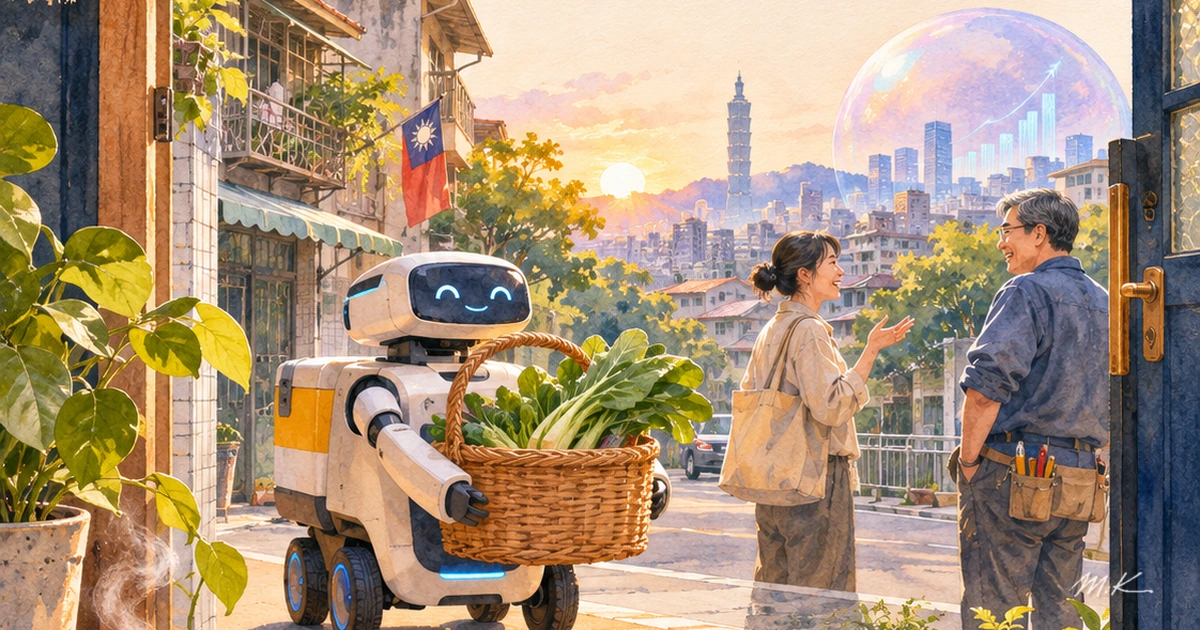
If I drew my own cover, I’d set it in a Taiwanese lane at dawn. A robot carries a basket out the door. Two neighbours are talking. Inside, there’s a hot coffee, a ledger and a blank ID card. The bubble is still there in the distance.
Standage and I see much of the same trouble ahead. I have deep concerns about 2027 and the following three years. I suspect he shares my reluctance to sell fear when speaking about those concerns in public. There are bills to settle and rules to write. I drew the street at sunrise because people still have choices about how to handle what’s coming.
As Dorami says at the end of the episode, the world will find a way of its own.