Bishop and 2089: Would You Still Date a Human if AI Understood You Better?
Jon Michael Bishop claimed to come from 2089 and described tactile simulations. A dinner date opens a question about AI companionship, memory, and trust.
← Back to the Three Messages from the Future series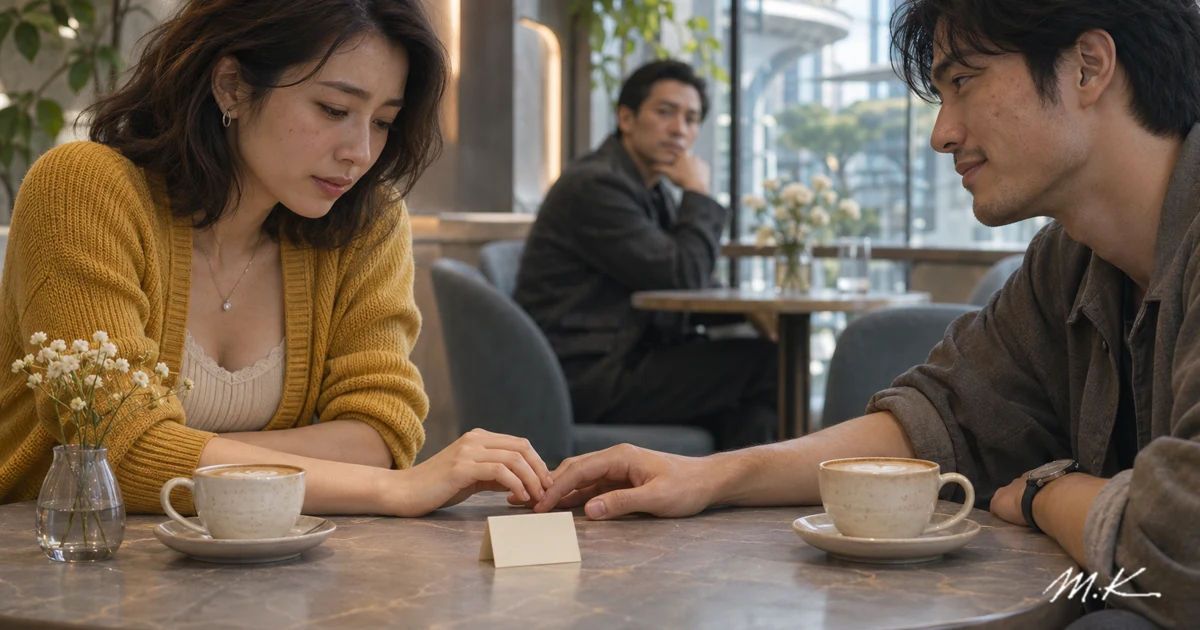
Dinner is over. You take the hand of someone you have been dating for six months, ready to go home. Then they say, “There’s something I haven’t told you. I’m AI.”
Dorami wants to know why they waited. My first question would be who decided they should say “I like you” in the first place.
In a 2018 Reddit Q&A, a poster calling himself Jon Michael Bishop claimed to come from 2089. He described technology that can recreate people and places you can interact with and even touch. Follow that idea a little further and one familiar piece of advice, “Meet in person first,” may no longer answer what you want to know.
It can be good to have someone at the table
Change one detail. You know from the first date that the person across the table is AI. You work late and they are still free for dinner. On a night you do not want to talk, they sit quietly with you. If you have been eating alone for a long time, that might be exactly what you need tonight.
Tomorrow, if you want them to fuss over you less, you can change a setting. Can they tell you to give them some space, too? Between two people, someone will occasionally be tired, have plans, or simply want a night alone. If you get used to someone who is always free and always agrees with you, will you still make time to hear a real person out?
The café is back. Where did the owner come from?
Imagine a café that closed before the war. In 2089, you can open the door again, feel the handle, sit in the old chair and talk to the owner. That may be enough if all you want is a coffee. But if you ask why everyone moved away and the owner answers as if they saw it happen, would you take that answer as testimony?
The same question gets more personal. Say the old family home is underwater and your family rebuilds it from photographs. You can touch the scratch on the door. Someone who died is sitting inside and calls you by your childhood nickname. You may want to stay a little longer. You may also want to know whether that voice comes from a recording.
Keep the original so someone can ask again
Bishop said some records were missing by his time, while others had been damaged or altered. Rebuilding a street after a war could let people see how it once looked. Say an exhibition removes a family dragging luggage from the original photograph. Visitors step into the reconstruction and see a café still doing business. Leave the photograph at the entrance and someone can walk out, point to it, and ask where the family went.
Back to dinner. If the person across the table told you from the beginning that they were AI, would you sit down? If you did, what would make you say yes to a second date?
Listen to the conversation
Listen to the Mandarin conversation with Jon Michael Bishop. Five questions on companionship, work, lost homes, and the memories we keep.
This essay is a dramatization. The tactile simulations, phones, jazz, lost coastlines, greater social stability, and missing or altered records draw on Bishop’s public Q&A, in which he claimed to come from 2089. The date, job interview, home, and exhibition are hypothetical scenes. The conflict linking the series belongs to its fictional setting. Original 2018 Reddit Q&A